Inside ARTEKI Studio: AI Animation That Ships
July 30, 2026 · #arteki #ai #animation
Contents
- Fast but soulless, or brilliant but unaffordable
- House Spirits: the proof of concept
- The Golden Pen: 15 trailers in record time
- Teki AI: the technology goes personal
Fast but soulless, or brilliant but unaffordable
Open any feed — AI-generated faces and synthetic videos are everywhere. Impressive, but try to feel something. Traditional 3D animation can deliver emotion, but it costs hundreds of millions and takes years. The industry is stuck between two extremes.
ARTEKI Studio — ATOM Group’s animation house, running the largest virtual production facility in Eastern Europe — is building the third way: traditional animation techniques merged with proprietary AI, digitizing the entire production workflow from script to final scene.
House Spirits: the proof of concept
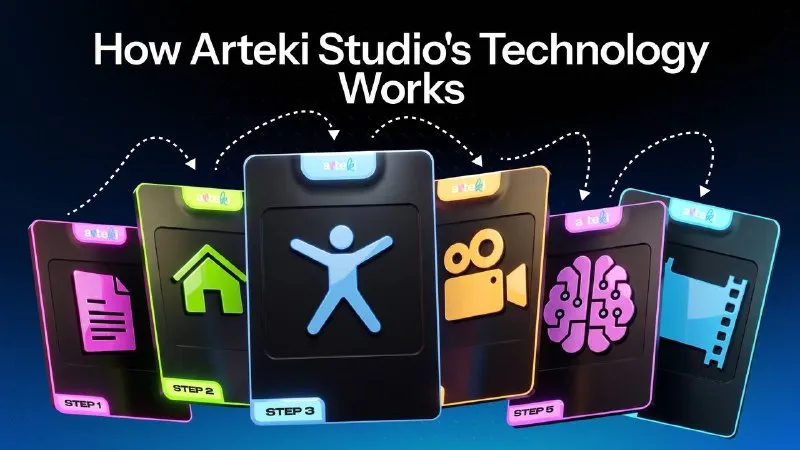
The trailer for “House Spirits” is live — and it is more than a first look at a story. It proves the studio’s software and AI work on a real production. The pipeline:
- Script breakdown — software turns the script into a scene-by-scene visual plan.
- Building the world — artists define the look; a locally trained AI model generates characters while the 3D team builds locations.
- Motion capture and assembly — performance drives the characters, and AI tools speed up lighting, rendering and cleanup.
The long-term goal is to license this technology to major studios — animation that keeps its soul, at a fraction of the cost.

The Golden Pen: 15 trailers in record time
At the Golden Pen Award — the biggest event for book authors in the MENA region — ARTEKI delivered something never done in the award’s history: 15 cinematic AI-generated trailers, one for each nominated book, produced in record time. For a moment, every viewer could step into an author’s world.
Teki AI: the technology goes personal
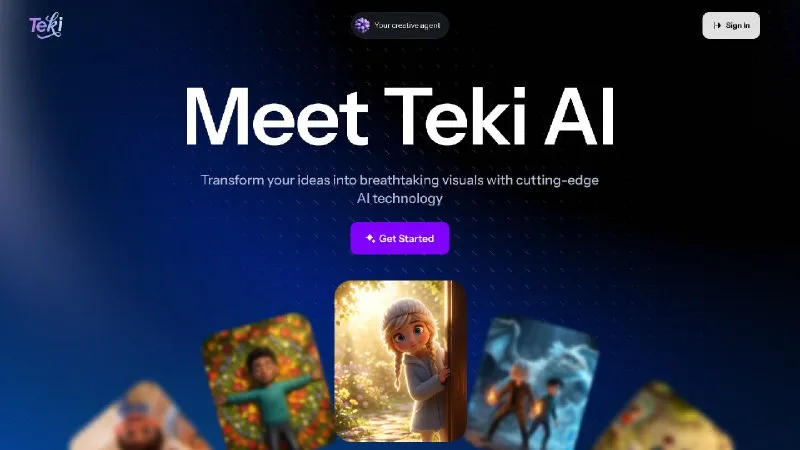
The same technology is becoming a consumer product. Teki AI turns personal moments into animation: a birthday card for your mom, a family photo brought to life, a pet animated in seconds. The web version already offers 29 scenarios across five categories, 15-second video generation and a personal library with share links — no design tools required.